History
07/24/20260 new articles
The story has been reframed slightly toward country-specific transition timing and practical implementation constraints, especially the need for a just transition, while the core Paris-aligned fossil-fuel phaseout message remains intact. The current version also softens the absolute framing around carbon capture and removal by emphasizing their limited role rather than mainly questioning their reliability.
07/23/20260 new articles
The story has become more concrete and granular: it now specifies a detailed fossil-fuel phaseout pathway, differentiating timelines by fuel type and naming the practical constraints and regional risks involved. It also sharpens the argument against new oil and gas development and CCS/CDR as substitutes.
- Peak fossil fuel use is modeled for 2025.
- Coal, gas, and oil now have separate phaseout timelines.
- New oil and gas fields are described as potentially stranded assets.
- Limited CCS deployment is now explicitly noted.
- Pakistan is highlighted as a fossil-fuel transition risk case.
07/23/20269 new articles
The story has broadened from a general fossil-fuel phaseout advocacy frame into a more specific debate about climate-modeling methods and implementation constraints. It now centers on scenario credibility, probabilistic framing, and the practical governance barriers to executing near-total fossil-fuel decline.
- Scenario frameworks are now criticized for lacking probabilities and being mistaken for forecasts.
- Emily Grubert highlights workforce, infrastructure, governance, and equity constraints.
- Chris Nelder and Doyne Farmer are new central actors in the modeling debate.
- Climate Analytics and the Potsdam Institute now support phase-out pathways reaching full elimination by 2070.
- CCS and carbon removal are framed more explicitly as non-substitutes for fossil-fuel decline.
06/18/2026Topic Formed
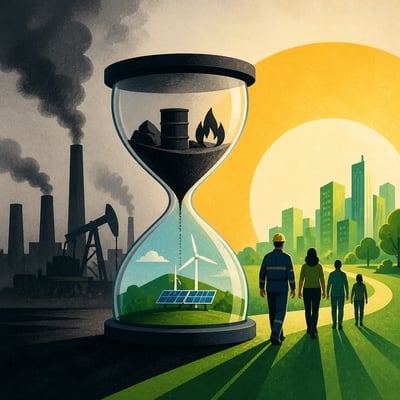
The material centers on science-based pathways calling for a rapid global fossil fuel phaseout, including halving fossil fuel use by 2035 and ending coal, oil, and gas use over the following decades. The dominant argument is that the 1.5°C Paris goal depends more on direct emissions cuts, electrification, and subsidy reform than on large-scale carbon removal. It also emphasizes transition fairness, with calls for finance, worker protections, and national roadmaps that differ by country context.

 Climate
 Privacy
 Bob Dylan
 Drones
 Data Centers
 AI Governance
 2026 Maine Senate Race