
 Climate
 Privacy
 Bob Dylan
 Drones
 Data Centers
 AI Governance
 2026 Maine Senate Race
Global Climate Risk Assessment
Coverage from The Conversation, Nature, and others
Articles
6
Active Days
177
The Topic
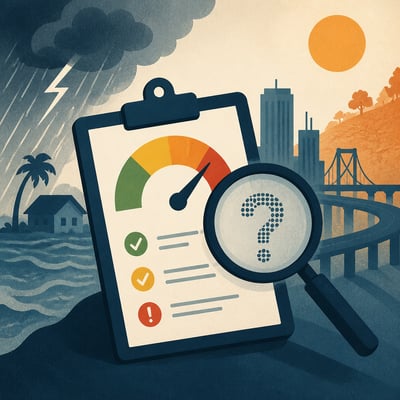
Climate scientists and risk researchers are calling for an authoritative, regularly updated global assessment that explains the severity, likelihood, and avoidability of climate risks. The proposed framework would complement IPCC science assessments by examining outcomes such as extreme heat, food and water insecurity, infrastructure disruption, sea-level rise, and cascading social impacts. Its value would depend on transparent methods, clear communication of uncertainty, and international coordination, all of which remain unresolved challenges.
First Article: 01/27/26
Latest Article: 07/22/26
Summary
- Researchers say no internationally mandated, up-to-date global assessment currently brings climate risks, probabilities, and consequences together.
- The proposed assessment would complement IPCC reports by focusing more directly on decision-relevant risks and avoidable outcomes.
- Rare events, threshold effects, and cascading impacts across food, health, infrastructure, finance, and security make the work methodologically difficult.
- Examples include extreme heat mortality, major sea-level rise, flooding, food-system disruption, and possible abandonment of parts of exposed cities.
- Advocates want best- and worst-case pathways presented together so uncertainty informs action rather than denial or fatalism.
- A separate study found limited sharing of data and code in highly cited climate-risk research, highlighting barriers to scrutiny and comparison.
- Political coordination, data sharing, regional differences, and regularly updating the framework remain unresolved implementation challenges.
History
The story now more explicitly centers on an internationally mandated, regularly updated global climate-risk assessment, and adds stronger emphasis on worst-case and avoidability framing. It also tightens the implementation challenge set around political coordination, regional differences, and regular updating.
The story has shifted from a general call for better climate-risk assessment to a more operational framing: the goal is now explicitly to turn climate science into probabilities, thresholds, and decision support. At the same time, a new transparency critique is sharpened by evidence that influential climate-risk research rarely shares data and code.
Featured
Timeline: 177 Days
Hover over any logo to see coverage summary, click for full article.