
 Climate
 Privacy
 Bob Dylan
 Drones
 Data Centers
 AI Governance
 2026 Maine Senate Race
Climate Impacts on African Agriculture
Coverage from Nature, ScienceDirect, and others
Articles
9
Active Days
187
The Topic
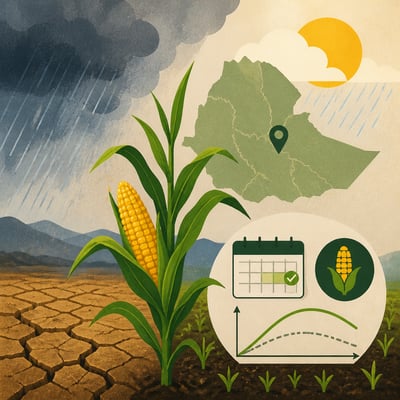
Recent studies show climate change altering crop yields, irrigation demand, and adaptation choices in African farming systems, especially Ethiopia. Temperature, rainfall, and evaporative demand are repeatedly linked to lower productivity, water stress, and shifting planting guidance.
First Article: 01/01/00
Latest Article: 08/01/26
Summary
- Ethiopian agriculture is the main empirical focus, with multiple studies assessing crop response, household vulnerability, and adaptation decisions in smallholder and agro-pastoral systems.
- Temperature increase, rainfall variability, and evaporative demand are the most repeated climate stressors, consistently tied to lower yields, water shortages, and reduced crop or livestock productivity.
- Several studies use crop or agro-hydrological models to project future maize, soybean, and wheat outcomes under emissions scenarios, showing location-specific and management-dependent results.
- Irrigation and planting-date adjustment emerge as the most practical adaptation levers, but their effectiveness depends on local water availability, cultivar choice, and timing.
- The literature repeatedly highlights unequal vulnerability across regions and households, with poverty, land scarcity, and limited climate information reducing adaptation capacity.
- A separate modeling strand shows climate-driven habitat expansion for Striga hermonthica, adding pest pressure to crop production risk in Ethiopian lowlands.
- The cluster is coherent but skewed toward research on food and water security rather than policy implementation or market response.
History
The story broadens from a maize-focused Ethiopia case to a wider set of climate-impact and adaptation studies across Ethiopian farming systems, with additional modeling of irrigation demand and pest risk. The framing also shifts toward water stress and household vulnerability as the central implications.
Featured
Timeline: 187 Days
Hover over any logo to see coverage summary, click for full article.