
 Climate
 Privacy
 Bob Dylan
 Drones
 Data Centers
 AI Governance
 2026 Maine Senate Race
Permafrost Thaw Reshapes Arctic Waters
Coverage from EurekAlert!, Chemistry World, and others
Articles
6
Active Days
323
The Topic
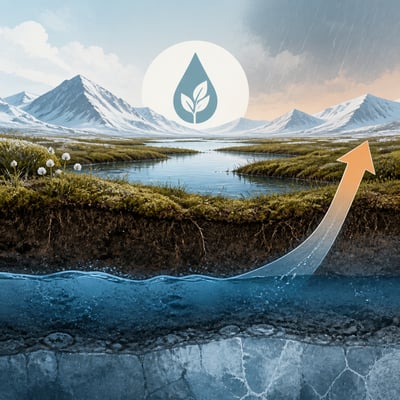
Permafrost thaw is altering Arctic waters through several connected pathways, including metal-rich runoff, river acidification, changing groundwater flow, and shifts in wetland conditions. Research in Alaska and Canada links thaw to orange, chemically degraded rivers, while studies in northern Norway indicate that carefully managed rewetting can reduce greenhouse-gas emissions from cultivated peatlands. The effects vary with geology, temperature, local hydrology, and land management, making monitoring and site-specific responses important.
First Article: 01/01/00
Latest Article: 06/07/26
Summary
- Thawing permafrost is releasing iron and other metals into Arctic streams through acid drainage and low-oxygen wetland processes.
- Orange iron particles can travel more than 100 kilometers, reducing water clarity and affecting algae, insects, fish gills, and salmon habitat.
- Measurements from Canadian river basins show increasing acidification and elevated cadmium, nickel, and zinc associated with thaw-driven runoff.
- Arctic groundwater responses are uneven: some regions are projected to become wetter while others develop deeper water tables and drier surface conditions.
- Raising groundwater levels in cultivated northern peatlands reduced overall greenhouse-gas emissions in a two-year Norway field study and sometimes produced net CO2 uptake.
- The benefits of peatland rewetting depend on temperature, fertilizer use, harvesting, and local soil conditions.
History
The story now places more weight on managed peatland rewetting as a climate-mitigation response, alongside the same core finding that thaw is degrading Arctic water chemistry. It also broadens the framing to emphasize specific impacts on salmon, aquatic ecosystems, and communities dependent on Arctic waters.
The story now places more emphasis on concrete biological impacts from thaw-related iron release and broadens the groundwater discussion to include coastal saltwater intrusion risks. It also updates the Norway peatland result to a more specific finding of reduced emissions and occasional net CO2 uptake.
Featured
Timeline: 323 Days
Hover over any logo to see coverage summary, click for full article.