History
07/22/20260 new articles
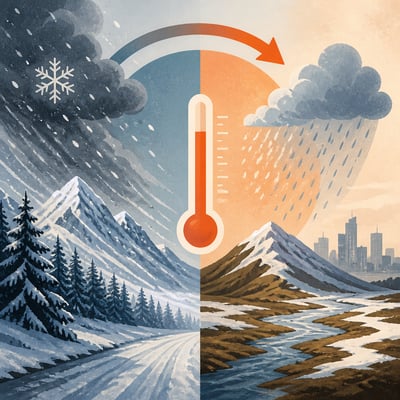
The story broadens from a general warning about precipitation changing to a more specific framing of hydrological volatility, adding new geographic emphasis on the Amazon and explicitly identifying updated forecasting and emergency-management needs. It also introduces new actors and institutions, including the University of Gothenburg and the National Weather Service, while sharpening the link between precipitation timing, evaporation, and water shortages.
07/22/20260 new articles
The framing has broadened from general shifts in storm timing and flood/drought risk to a more specific claim that precipitation patterns are undermining reliability of water systems, infrastructure standards, and emergency planning based on historical norms. The regional focus also now emphasizes the northeastern and eastern U.S. alongside high-latitude storm changes.
07/22/20262 new articles
The story has shifted from a broad winter-storm and precipitation-risk narrative to a more specific claim about precipitation concentration and rapid wet-dry swings driving both flooding and drought. It also adds new regional examples and identifies updated operational needs in forecasting and water management.
06/14/20263 new articles
The story broadens from winter precipitation volatility to a wider climate-driven pattern of concentrated rainfall, longer dry spells, and shoulder-season extremes that affect flood and drought risk as much as snow. The update also adds more explicit operational and regional focus, especially on local preparedness and Northeast volatility.
05/19/20263 new articles
The story now puts more emphasis on regional winter hazards and water-supply consequences, especially in the West and Pacific Northwest, rather than mainly on broad snowfall decline. It also adds a stronger evidence base from recent studies on precipitation timing and drought-linked drying, while keeping circulation explanations like the polar vortex uncertain.
05/11/2026Topic Formed
The cluster is primarily about how human-caused warming is changing winter conditions in the United States and Northern Hemisphere. The strongest current signal is not simply fewer snow events, but altered winter behavior: warmer air holds more moisture, some storms produce heavier snow or mixed precipitation, snow seasons shorten, snowmelt arrives earlier, and cold outbreaks still occur but within a warming long-term baseline. Coverage also emphasizes regional risk consequences for water supply, avalanche forecasting, power and emergency planning, and coastal storm impacts.

 Climate
 Privacy
 Bob Dylan
 Drones
 Data Centers
 AI Governance
 2026 Maine Senate Race