
 Climate
 Privacy
 Bob Dylan
 Drones
 Data Centers
 AI Governance
 2026 Maine Senate Race
Climate Justice and Vulnerable Communities
Coverage from Journal, TRT Afrika, and others
Articles
4
Active Days
98
The Topic
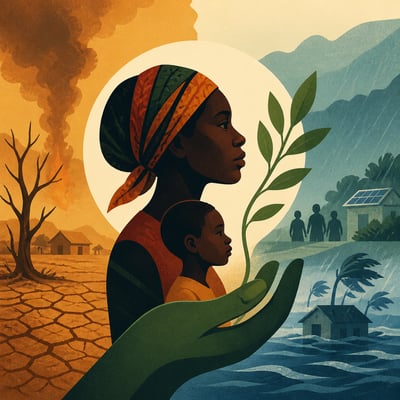
The topic centers on climate change as a justice and human rights challenge, with disproportionate effects on vulnerable communities in Malawi, Bangladesh, the Horn of Africa, Pacific islands, and other exposed regions. Reported impacts include food and water insecurity, illness, displacement, livelihood losses, and pressure on access to housing and public services. The material emphasizes rights-based governance, stronger environmental accountability, community participation, and international mechanisms to address unequal responsibility and climate-related loss.
First Article: 02/24/26
Latest Article: 06/01/26
Summary
- Climate shocks are linked to worsening risks to health, food, water, shelter, and livelihoods in vulnerable communities.
- Malawi is a major focus, with repeated floods, cyclones, droughts, and heat affecting displacement, food security, and poverty.
- The material calls for stronger environmental-law enforcement, access to justice, transparency, and community participation.
- Women, children, young people, displaced people, and low-income communities are identified as especially exposed to climate harms.
- Health impacts include respiratory disease, heat stress, vector-borne illness, malnutrition, and unsafe water following extreme events.
- Climate justice arguments emphasize that historical emissions and present-day vulnerability are distributed unevenly.
- International legal and institutional responses, including loss-and-damage mechanisms and climate-related court rulings, are developing but implementation remains uneven.
History
The story narrows from a broad climate-justice and international-liability framing into a more specific emphasis on rights-based governance and uneven implementation of climate responses. The current version also adds clearer institutional actors and recent Malawi-focused programming, making the governance and accountability angle more concrete.
The story broadens from a general climate-justice framing to a more specific rights-and-governance agenda, with stronger emphasis on institutional accountability and named implementation actors in Malawi. It also adds clearer linkage to international legal mechanisms, especially climate litigation and the Loss and Damage Fund.
Featured
Timeline: 98 Days
Hover over any logo to see coverage summary, click for full article.