History
07/22/20260 new articles
The story narrows from a broad climate-justice and international-liability framing into a more specific emphasis on rights-based governance and uneven implementation of climate responses. The current version also adds clearer institutional actors and recent Malawi-focused programming, making the governance and accountability angle more concrete.
07/22/20260 new articles
The story broadens from a general climate-justice framing to a more specific rights-and-governance agenda, with stronger emphasis on institutional accountability and named implementation actors in Malawi. It also adds clearer linkage to international legal mechanisms, especially climate litigation and the Loss and Damage Fund.
07/22/20261 new articles
The story broadened from a Malawi-centered climate justice and adaptation narrative into a wider human-rights and legal-accountability frame spanning multiple regions. It now gives greater weight to international legal developments, unequal emissions responsibility, and duties to future generations.
- International legal developments now shape the story.
- Unequal responsibility for emissions is explicitly emphasized.
- Obligations owed to future generations are newly highlighted.
- Women, children, young people, farmers, fishers, and displaced people are newly named.
05/19/20260 new articles
The main update is the emergence of a more concrete Malawi climate justice project, shifting the story from broad rights-based discussion toward actual NGO-led adaptation and governance implementation. The framing also becomes somewhat more specific on health impacts and justice-system pressure from climate shocks.
05/11/2026Topic Formed
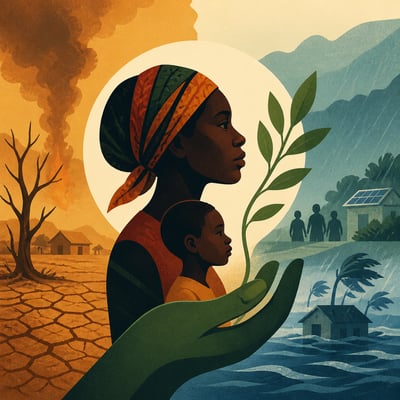
The cluster is centered on climate change framed through justice, rights, and vulnerable-population impacts, with a strong emphasis on Malawi and a supporting comparative research layer from other climate-exposed regions. Current coverage is dominated by adaptation and governance responses: community protection, enforcement of environmental law, climate finance access, and institutional capacity. The evidence base repeatedly links climate shocks to water stress, food insecurity, displacement, and health harms, while also stressing accountability and access to justice as core response needs.

 Climate
 Privacy
 Bob Dylan
 Drones
 Data Centers
 AI Governance
 2026 Maine Senate Race