History
07/22/20260 new articles
The story is now more specific about heat impacts and adaptation, adding evidence that wider heat-pump use could reduce overheating but raise summer electricity demand. It also sharpens the rainfall outlook with a clearer estimate of how many locations may face much more frequent impactful events under a moderate warming pathway.
07/22/20260 new articles
The update mainly refines the climate-risk framing rather than changing the underlying story: drought risk is now tied more explicitly to instrumental records, and rainfall impacts are more clearly linked to stronger atmospheric rivers and Southern Ocean storm changes. It also shifts the emphasis toward adaptation needs for flood, water, health and infrastructure planning.
07/22/20261 new articles
The story broadened from rainfall-and-drought risk into a wider climate-impacts picture that now includes summer heat, household overheating, electricity demand, and Southern Ocean changes. It also sharpens the geographic and social distribution of impacts, emphasizing regional variation and vulnerable groups.
- Summer heat may increase overheating and health risks.
- Electricity demand could shift toward cooling in warmer summers.
- Macquarie Island observations suggest intensifying Southern Ocean storms.
- Vulnerable groups include lower-income households, older people, renters, and Māori communities.
- Regional risk varies by emissions pathway and location.
06/29/20260 new articles
The update sharpens the framing from general climate-risk research to a more policy-relevant adaptation problem, adding explicit emphasis on agriculture, reservoirs, and regional risk assessment. It also introduces the Climate Change Commission as a new actor tied to drought-intensity assessment.
05/19/20262 new articles
The story broadens from rainfall-driven flood risk to a dual-hazard picture that now explicitly includes worsening drought exposure. It also adds historical drought reconstruction, which suggests severe drought risk has been underestimated because the worst events predate 1950.
- Drought risk is expected to rise in New Zealand under warming.
- Severe droughts before 1950 may mean recent experience understates risk.
- Warming increases soil drying and evaporation in drier regions.
- Adaptation now includes water management alongside flood planning.
- Weather-station reconstructions extend the evidence base into the pre-1950 record.
05/11/2026Topic Formed
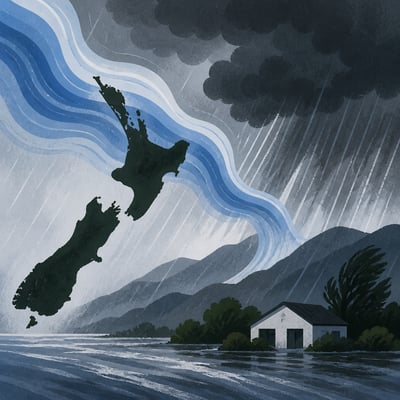
The cluster is centered on climate-model-based evidence that extreme rainfall in New Zealand is expected to become more intense and more frequent, with atmospheric rivers playing a larger role in future precipitation and flood risk. The strongest current signal is a convergent projection across studies and articles: warming increases moisture transport, raises the likelihood of heavier one-day and multi-day rainfall events, and creates uneven regional impacts. The cluster is coherent and stable, with limited fragmentation, and it is primarily about climate impact and adaptation pressure rather than policy or market response.

 Climate
 Privacy
 Bob Dylan
 Drones
 Data Centers
 AI Governance
 2026 Maine Senate Race