History
07/22/20264 new articles
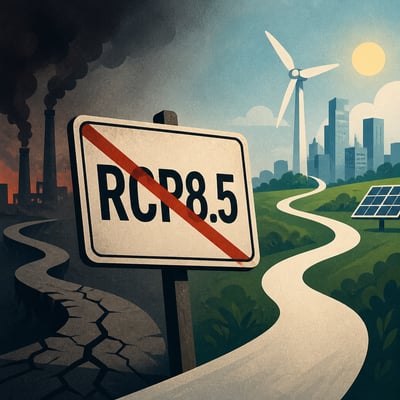
The update strengthens the case for retiring RCP8.5 by tying it more explicitly to observed clean-energy growth and policy effects, while adding a sharper debate over how the scenario was used in research and public discourse. It also broadens the framing from simple scenario replacement to an ongoing argument about scenario misuse and communication.
07/01/20263 new articles
The story has shifted from a narrower climate-scenario update to a broader methodological and policy-relevance debate. Beyond retiring the extreme pathway, the new version emphasizes how scenario changes affect stress tests, litigation, and public interpretation.
06/17/20263 new articles
The update mainly sharpens and broadens the climate-scenario rewrite: RCP8.5/SSP5-8.5 is now more explicitly being retired or replaced, while the newer framing adds stronger emphasis on the continued difficulty of meeting 1.5 C and the possibility of temporary overshoot. The story also gains a named new actor and more explicit IPCC/CMIP anchoring, but the core interpretation remains the same.
06/12/20264 new articles
The story has broadened from a technical reassessment of RCP8.5/SSP5-8.5 plausibility into a more explicit debate about how scenario revisions are being misread in public discussion. It now also adds concrete regional risk framing, especially for Europe, showing that the scenario downgrade does not imply lower climate danger.
06/02/20263 new articles
The update expands the story from retiring RCP8.5 alone to a broader revision of climate scenario frameworks, including SSP5-8.5, while sharpening the framing toward upper-bound rather than default-worst-case use. It also adds more explicit support that newer emissions pathways still imply severe warming and risk under weaker climate action.
05/19/2026Topic Formed
Climate scientists and scenario authors are treating RCP8.5 as an implausible high-emissions pathway rather than a likely business-as-usual future. The shift reflects lower renewable costs, expanding climate policy, and emissions trends that make the scenario harder to justify as a central forecast. Even so, the retirement of RCP8.5 does not eliminate climate risk, and substantial warming remains possible under other pathways.

 Climate
 Privacy
 Bob Dylan
 Drones
 Data Centers
 AI Governance
 2026 Maine Senate Race