
 Climate
 Privacy
 Bob Dylan
 Drones
 Data Centers
 AI Governance
 2026 Maine Senate Race
Attritable Drone Warfare
The ongoing major issues seen in articles and topics over time.
The Drivers
25
Articles Related
768
The Big Picture

Cheap, expendable drones are becoming a core battlefield instrument for reconnaissance, precision attack, harassment, resupply, and defensive interception. The issue centers on how low-cost FPV drones, loitering munitions, and improvised systems reshape tactics, force protection, and battlefield economics.
Attritable drones change the cost curve of war by allowing inexpensive systems to threaten soldiers, armored vehicles, air defenses, energy infrastructure, and rear-area logistics. Their spread across state and non-state actors suggests this will remain a defining feature of modern conflict.
Categories
Military Drones & Battlefield Use, Counter-Drone & Airspace Security, Autonomy, AI & Software, Market, Companies & Supply Chain
Keywords
attritable drones, FPV combat drones, loitering munitions, cheap precision strike, drone swarms, tactical drones, one-way attack drones, low-cost unmanned systems, battlefield drone tactics, drone-enabled attrition, small explosive drones, fiber-optic FPV, fiber-optic FPV proliferation, long-range FPV drones, Hezbollah FPV drones, sleeping drones, drone-controlled logistics routes, drone logistics interdiction, civil-war drone warfare, Sudan drone war, drone-on-drone combat, low-cost explosive payloads, jam-resistant FPV
The Drivers
The Topics below, and their articles, all focus on, exemplify, or help to explain this theme.
Primary
- 98
Army Scales Low-Cost Combat Drones
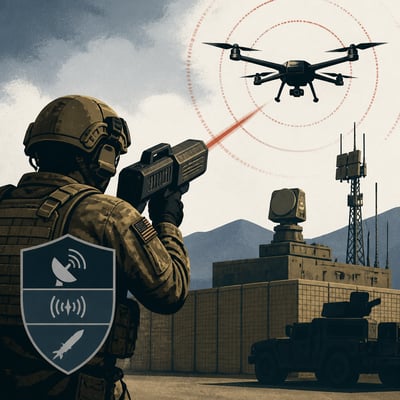
The U.S. Army is expanding the use of inexpensive drones for reconnaissance, attack, breaching, electronic-warfare targeting, and counter-drone missions. Exercises with the 101st Airborne Division and other units emphasize mass, low cost, simple operation, rapid local production, and training through simulators and repeated live flights. The shift could give smaller units more persistent battlefield coverage while reducing exposure of soldiers, but it also creates demands for batteries, operators, logistics, realistic training conditions, and reliable defenses against enemy drones.
Articles: 28
Last Updated: 07/30/2026
- 98
Trump Administration Expands Drone Funding

The Trump administration is seeking to expand U.S. drone production through a proposed increase in Pentagon drone spending, possible direct financing for selected manufacturers, and policies favoring domestically made systems. Reported funding structures could include loans, equity stakes, or other support intended to increase production capacity and reduce costs, while proposed spending also covers autonomous aircraft and counter-drone capabilities. The involvement of companies connected to Donald Trump Jr. and other Trump family investment interests has prompted conflict-of-interest and procurement-scrutiny concerns, even as officials and companies deny preferential treatment.
Articles: 16
Last Updated: 07/13/2026
- 98
Hezbollah Fiber-Optic FPV Drone Attacks
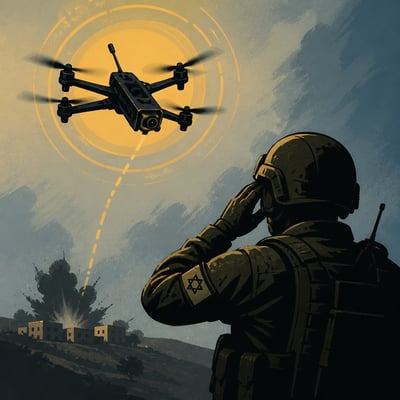
Hezbollah is using small, low-cost FPV drones, including fiber-optic-linked systems, to attack Israeli soldiers, tanks, bulldozers, and military positions in and around southern Lebanon. The cable link makes the drones resistant to conventional jamming, while their low-altitude flight and small size complicate detection and interception. Israel is responding with physical defenses, close-range weapons, mobile sensors, and efforts to develop multisensor counter-drone systems, while Ukrainian battlefield experience is emerging as a potential source of operational lessons.
Articles: 62
Last Updated: 07/29/2026
- 97
Hezbollah Drones Test Israel’s Border Defenses

Hezbollah is continuing to use reconnaissance, explosive, FPV, and reportedly fiber-optic-controlled drones against Israeli troops and targets near the Lebanon border despite a nominal ceasefire. Several attacks have killed or wounded Israeli personnel and a civilian contractor, while Israel has responded with intercept attempts, airstrikes, and strikes on Hezbollah infrastructure. The incidents highlight the difficulty of defending against inexpensive, low-signature drones in mountainous border terrain and are pushing Israel to expand and adapt layered counter-UAS capabilities.
Articles: 39
Last Updated: 07/27/2026
- 96
Russia Expands Shahed Attack Waves
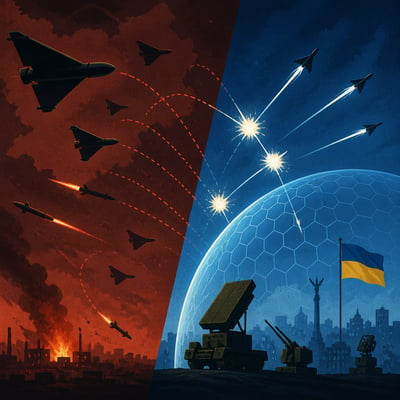
Russia is increasing the scale, duration, and technical sophistication of Shahed-type drone attacks against Ukraine. Recent reporting describes prolonged waves that extend into daylight, decoys and electronic-warfare payloads, operator-controlled flight, and faster jet-powered variants designed to complicate interception. Ukraine is responding with layered defenses and lower-cost interceptor drones, but large attack volumes continue to pressure air-defense resources and civilian infrastructure.
Articles: 25
Last Updated: 07/22/2026
- 95
Cheap Drones Reshape Air Defense
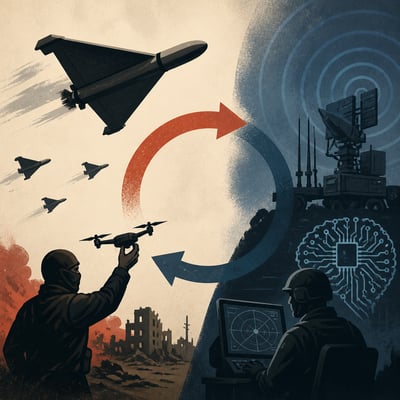
Low-cost drones, especially Shahed-style one-way systems, are being used at scale in Ukraine and the Middle East to strike military targets, air defenses, energy facilities, and shipping routes. Their low production cost can force defenders to spend far more on missiles and conventional systems, prompting Ukraine and NATO to expand interceptor drones, sensors, electronic warfare, and other layered defenses. The central shift is toward affordable systems produced in large numbers, while autonomy, jamming resistance, and human control remain unresolved operational issues.
Articles: 14
Last Updated: 07/28/2026
- 95
Japan Fields Low-Cost Cardboard Drones

Japan is acquiring AirKamuy 150 fixed-wing drones made largely from coated corrugated cardboard for inexpensive, rapidly assembled military use. The Japan Maritime Self-Defense Force is using the platform as an aerial target, while its flat-pack design, low reported price, and mass-production approach could support more frequent training and larger inventories of expendable drones. Reports also describe possible reconnaissance or attack applications, but those roles appear prospective rather than fully confirmed.
Articles: 6
Last Updated: 05/10/2026
- 91
Marine Corps Expands Autonomous UAS Programs

The U.S. Marine Corps is expanding autonomous UAS programs to support dispersed forces operating from ships and austere sites, with applications ranging from cargo resupply and persistent ISR to electronic warfare and strike. Key efforts include the MARV-EL logistics aircraft, the MUX TACAIR collaborative combat aircraft, and a modular command-and-control architecture intended to connect multiple UAS types. The programs could reduce exposure of crews and extend reach in contested areas, but weight, operator workload, maintenance, autonomy maturity, and testing timelines remain important barriers to fielding.
Articles: 4
Last Updated: 06/02/2026
- 91
Sudan Drone War Hits Civilians

Drones have become a central means of warfare in Sudan’s civil war, used by both the Sudanese Armed Forces and the Rapid Support Forces for surveillance, battlefield strikes, and attacks on transport routes and infrastructure. El-Obeid and surrounding North Kordofan have emerged as a major flashpoint, with reported strikes affecting markets, schools, water facilities, aid shipments, and civilian vehicles. The escalation is worsening humanitarian conditions and complicating attribution, while reported foreign supplies are enabling both sides to sustain operations beyond traditional front lines.
Articles: 14
Last Updated: 07/20/2026
- 89
Haiti Drone Strikes Draw U.s. Scrutiny

U.S. officials told Congress they plan to formalize closer coordination with Vectus Global, a private military company using drones through a Haitian government task force to target armed gangs. Human Rights Watch estimates that 141 drone operations killed 1,243 people and injured 738 between March 2025 and January 2026, including civilian casualties. The proposed coordination is unfolding alongside questions about contractor oversight, legal accountability, and the expansion of Haiti’s Gang Suppression Force.
Articles: 4
Last Updated: 07/22/2026
Secondary
- 92
Ukraine Expands Drone Defense Deals

Ukraine is using battlefield experience with attack drones, interceptor drones, sensors, and air-defense coordination to strengthen its defenses and pursue new military partnerships. Kyiv is negotiating or signing drone-related agreements with NATO, Middle Eastern, and other partners, while authorizing limited exports for testing and U.S. defense competitions. The shift could expand Ukraine’s role from a recipient of military aid to a supplier of drone expertise and equipment, but export controls, production capacity, air-defense gaps, and internal disputes over defense policy remain constraints.
Articles: 61
Last Updated: 07/29/2026
- 80
Russia-Ukraine Mass Drone Strikes Escalate
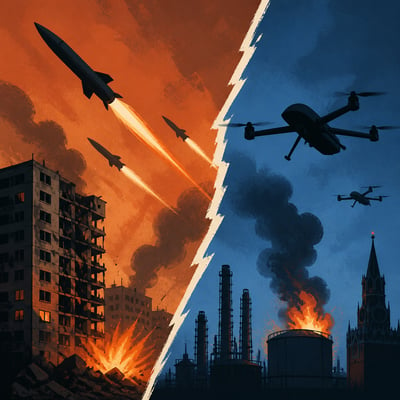
Russia and Ukraine are conducting increasingly large drone and missile strikes against each other’s cities, energy facilities, logistics sites, and maritime infrastructure. Russian attacks have repeatedly hit Kyiv and other Ukrainian cities, while Ukraine has expanded long-range drone operations toward Moscow, Russian fuel facilities, and occupied territory. The pattern is increasing civilian and infrastructure risk while exposing Ukraine’s shortage of Patriot interceptors and the difficulty of defending large areas against massed and evolving drone attacks.
Articles: 70
Last Updated: 07/30/2026
- 79
Ukraine Expands Drone War Beyond Front
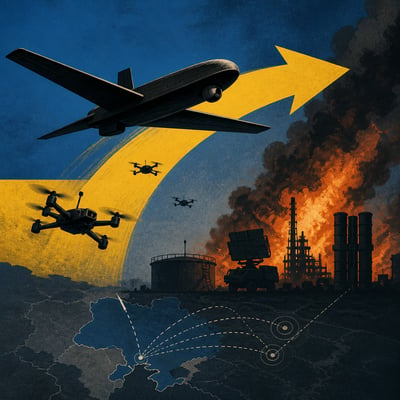
Ukraine is expanding drone operations beyond frontline attacks into maritime strikes around Crimea, bridge and logistics disruption, and lower-cost precision bombing. At the same time, Russian and Ukrainian FPV drones are widening the battlefield’s exposed zone, forcing special forces to disperse, infiltrate in small teams, and use ground robots for logistics and casualty evacuation. The expanding use of drones is increasing pressure on military supply routes and personnel while contributing to rising civilian casualties and risks to commercial infrastructure.
Articles: 89
Last Updated: 07/30/2026
- 79
Ukraine’s Mid-Range Drones Hit Russian Supply Lines
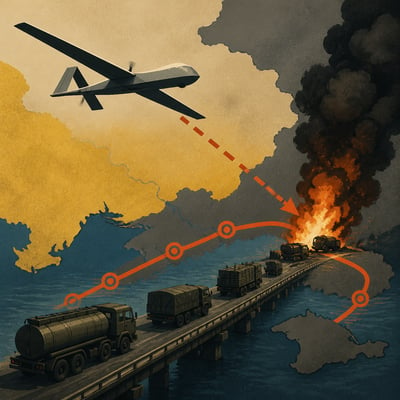
Ukraine is using domestically produced midrange fixed-wing drones to attack Russian fuel, ammunition, reinforcement routes, bridges, ports, and other logistics targets across the southern theater. The campaign is concentrated along routes linking Mariupol, Berdyansk, Melitopol, and Crimea, where repeated strikes have reportedly slowed resupply and contributed to fuel shortages and reduced Russian activity. Ukraine’s advantage remains contested as Russia deploys mobile fire groups, interceptor teams, and electronic warfare, while both sides adapt captured or existing drones for new missions.
Articles: 35
Last Updated: 07/27/2026
- 76
Ukraine Builds Faster Interceptor Drones To Counter Jet-Powered Gerans

Ukraine is expanding the use of relatively low-cost interceptor drones against Russian Shahed- and Geran-type attack drones. Manufacturers are moving pilots away from exposed frontline positions, adding AI-assisted detection and terminal guidance, and developing faster interceptors as Russia deploys more capable jet-powered variants. The shift could reduce reliance on expensive surface-to-air missiles, but effectiveness remains dependent on weather, sensors, connectivity, pilot skill, electronic warfare, and production scale.
Articles: 13
Last Updated: 07/24/2026
- 74
Military Drones Shift Toward Swarms
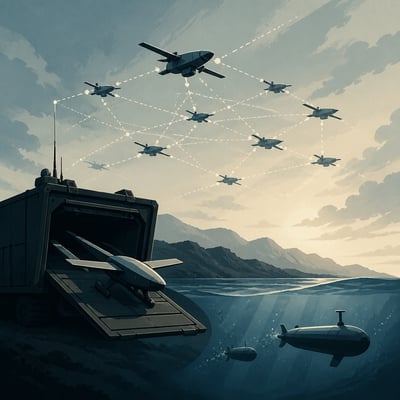
Military drone programs are moving toward larger fleets of low-cost FPV aircraft, autonomous coordination, and systems that let one operator manage multiple drones. Ukraine is a central reference point for production and battlefield experimentation, while U.S. programs and European investment are seeking to scale comparable capabilities. The shift is increasing demand for swarming software, counter-drone defenses, resilient supply chains, and manufacturing capacity, but the effectiveness and maturity of more autonomous systems remain uneven.
Articles: 46
Last Updated: 07/29/2026
- 74
South Korea Expands Military Drone Forces

South Korea plans to train roughly 500,000 military personnel to operate drones and distribute larger numbers of commercial, expendable, swarm, and loitering systems across the army, navy, air force, and marines. The program also expands laser and high-power microwave defenses, accelerates domestic procurement, and gives individual services more responsibility for drone operations. The effort is aimed at countering North Korean capabilities, addressing manpower constraints, and applying battlefield lessons from Ukraine and the Middle East, but its scale and feasibility remain uncertain.
Articles: 13
Last Updated: 07/18/2026
- 73
Drone Strikes Expand Civilian Harm

Drone strikes across Ukraine and surrounding areas are causing civilian deaths and injuries, damaging homes and infrastructure, disrupting maritime activity, and raising safety concerns around the Zaporizhzhia nuclear power plant. Hospitals are treating increasingly severe drone-related wounds, while attacks on ports and cargo vessels show that the effects extend beyond front-line positions. The reporting also highlights the difficulty of protecting civilian sites and maintaining critical services under sustained drone attacks.
Articles: 13
Last Updated: 07/28/2026
- 73
Ukraine Drone Strikes Target Russian Logistics

Ukraine is using increasingly capable midrange drones to attack Russian supply routes, infrastructure, and rear areas, including the logistics corridors feeding occupied Crimea. Russia continues large-scale drone strikes against Ukrainian cities and civilian infrastructure, while both sides expand interception, electronic warfare, and other counter-drone measures. The campaign is disrupting fuel and transport access in occupied areas, increasing risks for civilians and aid workers, and accelerating drone production and military adaptation.
Articles: 76
Last Updated: 07/29/2026
- 72
Ukraine-Russia Drone War Escalates
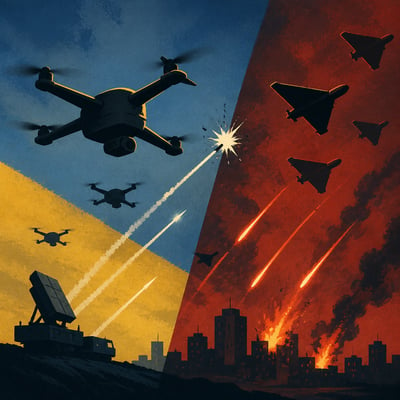
Ukraine and Russia are using drones at increasing scale for long-range attacks, air defense, maritime strikes, and attacks on military, energy, logistics, and urban targets. Ukrainian officials report record interceptor-drone use and a major expansion in strike range, while Russian authorities describe large Ukrainian raids against Moscow and other regions and continue launching mass drone attacks against Ukraine. The developments are increasing pressure on air defenses, disrupting infrastructure and transport, and exposing civilians and industrial facilities to repeated attacks.
Articles: 44
Last Updated: 07/31/2026
- 72
Ukraine’s Drone Warfare Reform Crisis
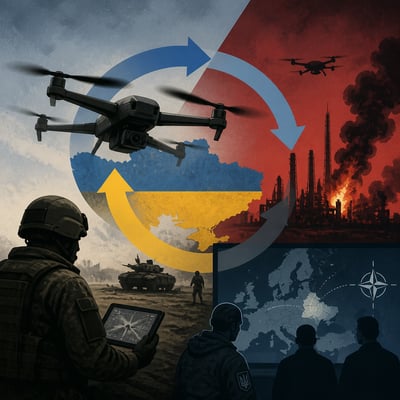
Ukraine is expanding the use of aerial drones, ground robots, naval systems and electronic warfare to offset manpower shortages and operate across a battlefield increasingly shaped by persistent drone threats. The shift has intensified a dispute over military leadership and reform, with soldiers and officials divided over whether centralized command structures are adapting quickly enough to data-driven and unmanned warfare. The experience is also imposing costs on Russian forces and infrastructure while offering broader lessons about base protection, logistics, counter-drone defenses and supply resilience.
Articles: 68
Last Updated: 07/31/2026
- 72
Europe Expands Low-Cost Drone Defenses
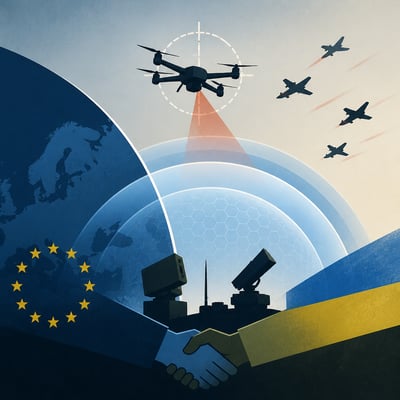
European militaries and defense companies are expanding low-cost ways to detect, jam, intercept, and destroy attack drones, drawing heavily on lessons from Ukraine and the growing use of Shahed-style systems. New efforts include interceptor drones, AI-assisted targeting, cheaper missiles, and layered defenses for military forces, cities, and high-profile events. The shift is also driving partnerships, domestic production, and pressure to reform procurement so systems can be adapted and manufactured at battlefield speed.
Articles: 7
Last Updated: 07/10/2026
- 72
Trident Scales Autonomous Targeting System For Drones
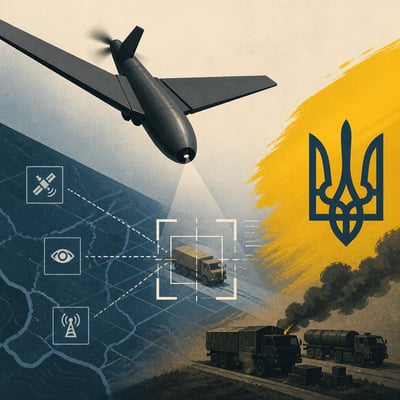
Ukraine is testing and scaling AI-assisted targeting for strike drones, moving from image-based target recognition toward terminal guidance and, eventually, autonomous target selection. Trident is developing a modular system for fixed-wing and multirotor platforms, while Ukrainian forces are integrating reconnaissance, data fusion, and multiple strike ranges against Russian logistics. The technology could reduce dependence on continuous operator links and satellite navigation, but fully autonomous attack decisions remain at an early testing stage and broader military approval is still pending for at least one system.
Articles: 3
Last Updated: 07/08/2026
- 71
Marines Build Counter-Drone Training Hub

The US Marine Corps is building a broader system for using and defeating small battlefield drones, including new training organizations, counter-drone teams, expanded procurement, and experiments with helicopter-launched FPV aircraft. Marines are also addressing practical barriers such as operator proficiency, battery safety, electromagnetic-spectrum access, and interoperability across multiple drone types. The effort reflects a shift from isolated experimentation toward standardized capabilities intended for reconnaissance, attack, maritime operations, and defense against hostile drones.
Articles: 11
Last Updated: 07/20/2026
- 70
Germany Expands Military Drone Programs

Germany is restructuring military procurement and expanding industrial capacity to adopt drones, loitering munitions and counter-drone systems more quickly. The effort brings start-ups, established defense companies, Ukrainian partners and public research institutions closer to the Bundeswehr, while major programs are being demonstrated and promoted at ILA Berlin. The shift could improve the speed and scale of German drone adoption, but testing failures, dependence on vulnerable digital networks, oversight concerns and local opposition remain significant constraints.
Articles: 7
Last Updated: 07/22/2026