
 Climate
 Privacy
 Bob Dylan
 Drones
 Data Centers
 AI Governance
 2026 Maine Senate Race
Counter-Drone Defense Race
The ongoing major issues seen in articles and topics over time.
The Drivers
26
Articles Related
798
The Big Picture
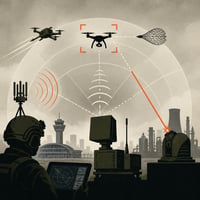
Military, public-safety, and infrastructure operators are racing to detect, classify, track, and defeat small drones that evade legacy air-defense systems. The issue includes layered sensing, jamming, kinetic interceptors, directed energy, drone-on-drone interception, and operational training.
Small drones expose a persistent defense gap: they are cheap, low-signature, numerous, and often too costly to defeat with traditional missiles. Counter-drone capability is becoming a permanent requirement for armies, cities, airports, prisons, stadiums, and critical infrastructure.
Categories
Counter-Drone & Airspace Security, Military Drones & Battlefield Use, Regulation, Safety & Airspace Integration, Public Safety, Emergency Response & Government Use
Keywords
5G-controlled drones, acoustic drone sensors, airport drone detection, airport drone near miss, anti-drone rifle ammunition, AREONOUS, ATLA interceptor drone program, base defense counter-UAS, Black Wasp interceptor, BSI Flex 335, CACI SkyValor, cellular-controlled drones, close-range FPV defense, correctional facility counter-UAS, counter-drone exercises, counter-drone lasers, counter-UAS interoperability, counter-UAS legal authority, counter-UAS procurement guidance, counter-UAS training centers, critical infrastructure counter-UAS, Destinus Hornet, directed-energy counter-UAS, directed-energy drone defense, drone attribution, drone contraband drops, drone suppression, edge AI drone classification, Edge AI drone detection, fan zone drone restrictions, fiber-optic FPV defense, fiber-optic FPV detection, ForceField counter-UAS, Freedom Eagle-1, GARMR, Gerbera decoy drones, high-power microwave weapons, high-powered microwave counter-UAS, Iron Beam laser, Iron Wasp interceptor, Italmas drones, jam-resistant FPV defense, JIATF-401, Joint Interagency Task Force 401, kinetic counter-drone effectors, layered drone detection, layered swarm defense, LOCUST directed energy, low-cost interceptor drones, LTE-controlled drones, major-event counter-UAS, man-on-the-loop counter-UAS, mass-event drone enforcement, Mercedes-Benz Drone Defender, METIS interceptor, Mnogotochie anti-drone round, mobile fire groups, multi-projectile anti-drone rounds, net-capture interceptors, No Drone Zones, non-emitting counter-drone system, non-emitting drone detection, non-RF drone detection, operator attribution, Parodiia decoy drones, passive counter-UAS sensors, portable laser weapon, prison drone smuggling, rapidly deployable counter-UAS, Remote ID enforcement, RF detection limits, rifle-caliber anti-drone rounds, Safer Skies Act, SAPIENT architecture, Shahed killer, Shahed wave defense, shipboard interceptor drones, shotgun counter-drone defense, SkyValor, sports venue counter-UAS, stadium drone seizures, state and local counter-UAS authority, Terra Drone interceptor, Titan RF jamming, triple-projectile anti-drone ammunition, Tytan Technologies, vehicle-mounted counter-FPV, World Cup counter-drone security, World Cup drone seizures
The Drivers
The Topics below, and their articles, all focus on, exemplify, or help to explain this theme.
Primary
- 99
Counter-Drone Defenses Face Readiness Gaps

Governments, militaries, airports, and infrastructure operators are expanding counter-drone defenses after incursions and attacks expose weaknesses in conventional air-defense systems. The emerging approach favors layered architectures that combine radar, radio-frequency sensing, electronic warfare, visual and acoustic detection, guns, interceptor drones, and high-end missiles rather than relying on a single system. Adoption remains constrained by the cost and replenishment limits of missile interceptors, incomplete coverage, safety risks around civilian airspace, and unresolved legal and coordination requirements.
Articles: 31
Last Updated: 07/26/2026
- 98
IAI Launches HYPNOSIS Counter-Drone System
Israel Aerospace Industries has introduced HYPNOSIS, a ground-based counter-drone system that uses coordinated GNSS jamming and spoofing to divert or neutralize navigation-dependent drones. Mobile stations linked to a command-and-control center are intended to defend energy facilities, military bases, air-defense sites, and other strategic locations, including against attacks from multiple directions. The system could reduce reliance on expensive interceptors, but its performance against drones using hardened or non-GNSS navigation remains unverified in publicly available data.
Articles: 4
Last Updated: 07/26/2026
- 98
World Cup Counter-Drone Security
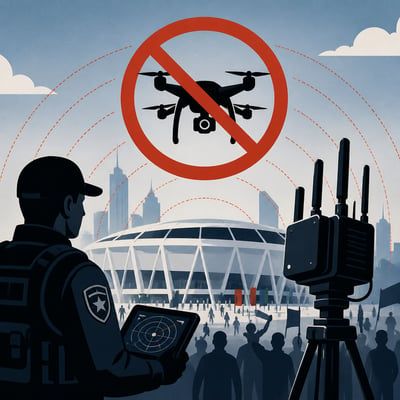
Security planning for the 2026 World Cup is centered on blocking drone activity around stadiums, fan zones, and related public gatherings. Federal agencies, local police, and private vendors are deploying detection and mitigation tools, backed by large public funding and temporary flight restrictions. The topic matters because the tournament is being treated as a major test of U.S. counter-drone capability for large events.
Articles: 24
Last Updated: 07/27/2026
- 98
Ukraine Builds Faster Interceptor Drones To Counter Jet-Powered Gerans
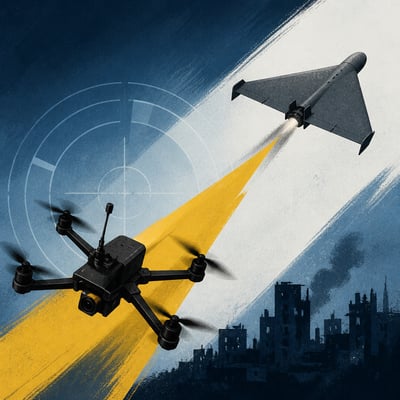
Ukraine is expanding the use of relatively low-cost interceptor drones against Russian Shahed- and Geran-type attack drones. Manufacturers are moving pilots away from exposed frontline positions, adding AI-assisted detection and terminal guidance, and developing faster interceptors as Russia deploys more capable jet-powered variants. The shift could reduce reliance on expensive surface-to-air missiles, but effectiveness remains dependent on weather, sensors, connectivity, pilot skill, electronic warfare, and production scale.
Articles: 13
Last Updated: 07/24/2026
- 97
Aerovironment Expands Counter-Drone Systems
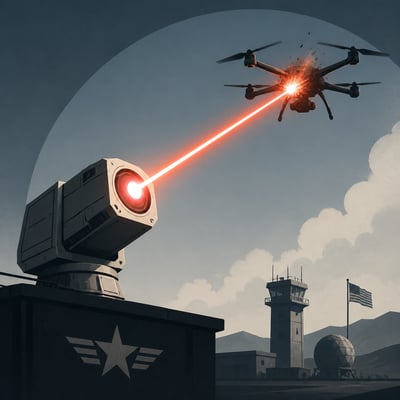
AeroVironment is expanding its counter-drone business as military demand grows for systems that can detect, jam, disable, or destroy small unmanned aircraft. The company’s Titan systems are moving into wider U.S. military deployment, while LOCUST directed-energy weapons and Freedom Eagle-1 kinetic interceptors broaden its defensive portfolio. The material also highlights a persistent operational challenge: many military drones remain highly vulnerable to laser attacks and lack publicly known systems to detect those attacks in progress.
Articles: 24
Last Updated: 07/30/2026
- 97
World Cup Counter-Drone Security

U.S. federal, state, and local authorities are deploying counter-drone systems, training officers, and enforcing temporary flight restrictions across World Cup venues in the United States, Mexico, and Canada. More than 1,000 drone detections and hundreds of mitigations or seizures have been reported at tournament-related sites, while FEMA funding and DHS technical support are expanding local capabilities. The effort is also exposing coordination, training-capacity, interoperability, and technology gaps, particularly against inexpensive cellular-controlled or improvised drones.
Articles: 25
Last Updated: 07/27/2026
- 97
Europe Scales Counter-Drone Defenses

European defense companies and industrial partners are expanding counter-drone capabilities, combining radar and multisensor detection with jamming, lasers, nets, and autonomous or human-supervised interceptors. Germany is a major focal point, driven by reported drone activity around airports and critical infrastructure, while Ukraine’s battlefield experience is shaping demand for lower-cost defenses against small and mass-produced threats. The central challenge is turning prototypes and announced partnerships into affordable systems that can be manufactured at scale and legally deployed in civilian and military airspace.
Articles: 14
Last Updated: 07/28/2026
- 96
New Drone Interceptors Target Shahed Threats
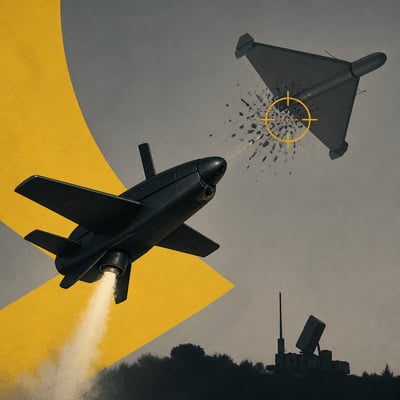
Granta Autonomy, Rafael and SpearUAV have introduced compact interceptor drones intended to engage Shahed-class strike drones, loitering munitions and other aerial threats. Black Wasp emphasizes VTOL deployment, autonomous guidance and operation during GPS disruption, while Iron Wasp is positioned as a canister-launched, vehicle-mounted interceptor within a layered defense system. The launches reflect continued efforts to provide faster, more deployable and potentially lower-cost alternatives or complements to missiles, guns and electronic warfare, but reported performance remains partly based on manufacturer claims.
Articles: 3
Last Updated: 06/25/2026
- 96
Army Scales Low-Cost Combat Drones
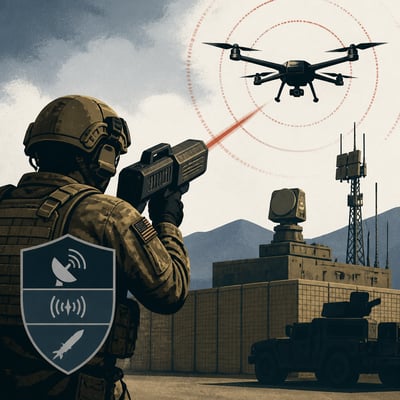
The U.S. Army is expanding the use of inexpensive drones for reconnaissance, attack, breaching, electronic-warfare targeting, and counter-drone missions. Exercises with the 101st Airborne Division and other units emphasize mass, low cost, simple operation, rapid local production, and training through simulators and repeated live flights. The shift could give smaller units more persistent battlefield coverage while reducing exposure of soldiers, but it also creates demands for batteries, operators, logistics, realistic training conditions, and reliable defenses against enemy drones.
Articles: 28
Last Updated: 07/30/2026
- 95
Europe Expands Low-Cost Drone Defenses

European militaries and defense companies are expanding low-cost ways to detect, jam, intercept, and destroy attack drones, drawing heavily on lessons from Ukraine and the growing use of Shahed-style systems. New efforts include interceptor drones, AI-assisted targeting, cheaper missiles, and layered defenses for military forces, cities, and high-profile events. The shift is also driving partnerships, domestic production, and pressure to reform procurement so systems can be adapted and manufactured at battlefield speed.
Articles: 7
Last Updated: 07/10/2026
- 94
Russia Deploys Triple-Projectile Anti-Drone Rounds
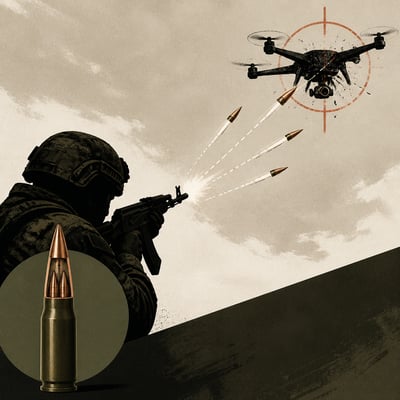
Russia is introducing Mnogotochie, a rifle-caliber anti-drone round that splits into three projectiles after firing to improve the odds of hitting small low-flying drones. Rostec says testing is complete, production is underway, and initial batches have reached Russian troops. The topic matters because it shows infantry units being equipped with a cheaper, closer-range countermeasure as drones become harder to stop with conventional small arms alone.
Articles: 4
Last Updated: 07/18/2026
- 92
FBI Foils Explosive Drone Plot

U.S. authorities said the FBI disrupted an alleged multi-stage attack involving explosive drones, sniper fire and an assault on the White House during the UFC Freedom 250 event. Five suspects were reportedly arrested, and at least one defendant was formally charged, after investigators examined encrypted communications, weapons purchases and travel linked to the alleged plan. The case highlights the security demands of high-profile gatherings and the limits of relying on airspace restrictions alone to prevent malicious drone launches.
Articles: 6
Last Updated: 07/23/2026
- 92
White House UFC Explosive-Drone Plot

Federal authorities allege that a group planned to use explosive-laden drones to trigger panic at a UFC event on the White House grounds, followed by shootings targeting people leaving the venue and possibly a second assault on a security checkpoint. The FBI and partner agencies arrested suspects across several states, while later federal charges expanded the alleged conspiracy. The case highlights the security challenge posed by small drones at high-profile gatherings, although court documents do not establish that the group had assembled all the equipment needed to carry out the plan.
Articles: 37
Last Updated: 07/29/2026
- 91
MQ-9 Tests Counter-Drone Rockets
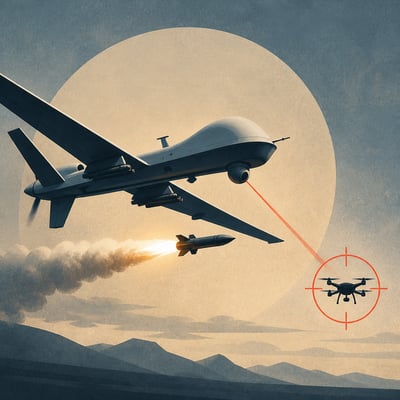
The topic centers on MQ-9 Reaper testing and training focused on laser-guided rockets, including air-to-air counter-drone use. U.S. Air Force and General Atomics demonstrations show the platform being adapted for cheaper, more flexible strike and drone-defense missions. A separate training piece shows the MQ-9 mission remains active in day-to-day Air National Guard operations, with crews and maintainers treating it as a long-running capability.
Articles: 3
Last Updated: 07/01/2026
Secondary
- 86
Hezbollah Fiber-Optic FPV Drone Attacks
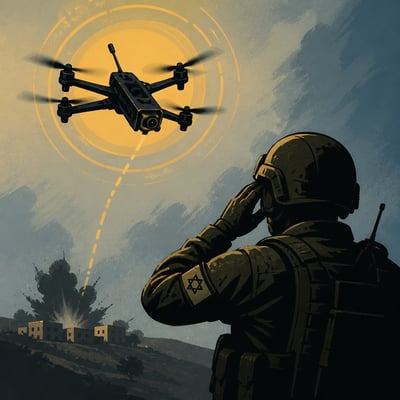
Hezbollah is using small, low-cost FPV drones, including fiber-optic-linked systems, to attack Israeli soldiers, tanks, bulldozers, and military positions in and around southern Lebanon. The cable link makes the drones resistant to conventional jamming, while their low-altitude flight and small size complicate detection and interception. Israel is responding with physical defenses, close-range weapons, mobile sensors, and efforts to develop multisensor counter-drone systems, while Ukrainian battlefield experience is emerging as a potential source of operational lessons.
Articles: 62
Last Updated: 07/29/2026
- 86
South Korea Expands Military Drone Forces

South Korea plans to train roughly 500,000 military personnel to operate drones and distribute larger numbers of commercial, expendable, swarm, and loitering systems across the army, navy, air force, and marines. The program also expands laser and high-power microwave defenses, accelerates domestic procurement, and gives individual services more responsibility for drone operations. The effort is aimed at countering North Korean capabilities, addressing manpower constraints, and applying battlefield lessons from Ukraine and the Middle East, but its scale and feasibility remain uncertain.
Articles: 13
Last Updated: 07/18/2026
- 84
Cheap Drones Reshape Air Defense
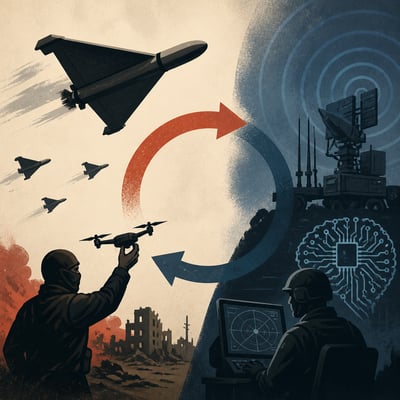
Low-cost drones, especially Shahed-style one-way systems, are being used at scale in Ukraine and the Middle East to strike military targets, air defenses, energy facilities, and shipping routes. Their low production cost can force defenders to spend far more on missiles and conventional systems, prompting Ukraine and NATO to expand interceptor drones, sensors, electronic warfare, and other layered defenses. The central shift is toward affordable systems produced in large numbers, while autonomy, jamming resistance, and human control remain unresolved operational issues.
Articles: 14
Last Updated: 07/28/2026
- 84
Drones Test Ukraine’s Air Defenses

Ukraine is using mid-range drones to strike Russian logistics, fuel, air-defense sites, and command positions, while Russia is responding with concealment, air defenses, and electronic jamming aimed at disrupting Starlink-linked control. Ukrainian crews are also targeting the jamming systems themselves. At the same time, drones crossing into Romania and the Baltic region are exposing gaps in low-altitude detection and interception, prompting NATO and European governments to seek more radar, counter-drone equipment, and coordinated responses.
Articles: 75
Last Updated: 07/30/2026
- 84
Marines Build Counter-Drone Training Hub

The US Marine Corps is building a broader system for using and defeating small battlefield drones, including new training organizations, counter-drone teams, expanded procurement, and experiments with helicopter-launched FPV aircraft. Marines are also addressing practical barriers such as operator proficiency, battery safety, electromagnetic-spectrum access, and interoperability across multiple drone types. The effort reflects a shift from isolated experimentation toward standardized capabilities intended for reconnaissance, attack, maritime operations, and defense against hostile drones.
Articles: 11
Last Updated: 07/20/2026
- 83
Hezbollah Drones Test Israel’s Border Defenses

Hezbollah is continuing to use reconnaissance, explosive, FPV, and reportedly fiber-optic-controlled drones against Israeli troops and targets near the Lebanon border despite a nominal ceasefire. Several attacks have killed or wounded Israeli personnel and a civilian contractor, while Israel has responded with intercept attempts, airstrikes, and strikes on Hezbollah infrastructure. The incidents highlight the difficulty of defending against inexpensive, low-signature drones in mountainous border terrain and are pushing Israel to expand and adapt layered counter-UAS capabilities.
Articles: 39
Last Updated: 07/27/2026
- 78
Ukraine Drone Strikes Target Russian Logistics

Ukraine is using increasingly capable midrange drones to attack Russian supply routes, infrastructure, and rear areas, including the logistics corridors feeding occupied Crimea. Russia continues large-scale drone strikes against Ukrainian cities and civilian infrastructure, while both sides expand interception, electronic warfare, and other counter-drone measures. The campaign is disrupting fuel and transport access in occupied areas, increasing risks for civilians and aid workers, and accelerating drone production and military adaptation.
Articles: 76
Last Updated: 07/29/2026
- 74
Russia Expands Shahed Attack Waves

Russia is increasing the scale, duration, and technical sophistication of Shahed-type drone attacks against Ukraine. Recent reporting describes prolonged waves that extend into daylight, decoys and electronic-warfare payloads, operator-controlled flight, and faster jet-powered variants designed to complicate interception. Ukraine is responding with layered defenses and lower-cost interceptor drones, but large attack volumes continue to pressure air-defense resources and civilian infrastructure.
Articles: 25
Last Updated: 07/22/2026
- 74
Iranian Drones Threaten Hormuz Shipping

Iranian drones and missiles are being used against commercial shipping, U.S. forces, and regional partners as fighting with the United States intensifies around the Strait of Hormuz. U.S. strikes against Iranian coastal surveillance, air-defense, naval, missile, and drone sites have not eliminated the threat, while Gulf states and Iraq continue intercepting or reporting attacks. The resulting mine risk, rerouting, port restrictions, and air-defense demands are reducing traffic through a route that previously carried a major share of global oil shipments.
Articles: 72
Last Updated: 07/31/2026
- 74
U.s. Cracks Down On World Cup Drones

U.S. agencies are enforcing temporary flight restrictions around 2026 FIFA World Cup stadiums and fan zones, using detection, tracking, disablement, seizures, tickets, and criminal charges against unauthorized drone operators. More than 700 drones had been seized by July 16, with restrictions covering 11 U.S. host cities and penalties reaching $100,000 in fines, confiscation, and possible prosecution. The response is also extending broader counter-drone capabilities and policy discussions for airports, critical infrastructure, and future large public events.
Articles: 116
Last Updated: 07/30/2026
- 72
New York Airport Drone Encounters

Passenger aircraft reported drone encounters while approaching Newark and JFK airports in late June 2026. All affected flights landed safely, but the reports have renewed attention on unauthorized drone operations near controlled airspace, airport detection measures, and the difficulty of confirming alleged collisions when inspections find no aircraft damage or corresponding drone evidence.
Articles: 56
Last Updated: 07/27/2026
- 71
World Cup Drone Restrictions Tighten

Federal and local authorities imposed temporary flight restrictions over World Cup stadiums, fan festivals, and watch parties in Dallas, Atlanta, and northern New Jersey, covering drones as well as other unauthorized aircraft. Enforcement included drone seizures, counter-surveillance, arrests, and federal charges, while F-16s intercepted other aircraft that entered restricted New Jersey airspace. The measures show how major sporting events create tightly controlled drone-free zones and increase legal and operational risks for unauthorized operators.
Articles: 16
Last Updated: 07/22/2026